Monday, 24 August 2020

Butter- its production, types, and uses

 Butter is made from the fat in milk by Butter Production Lines. It is a highly caloric product due to its high-fat content, which also provides significant vitamins A and D.

Butter is a widely consumed food that shows great versatility in the kitchen.

The butter is the product obtained from milk by mechanical means or by whipping cream pasteurized. The term butter designates only the product made with milk or cream from cow's milk.

How is butter made?

Butter production consists of several stages:     

1st. The cream is separated from the milk (skimming). It can be done either by leaving the milk at rest for several hours or skimming machines designed for this purpose.

2nd. Then the cream will be transformed into Butter Silos through a series of operations. They include pasteurization of the cream, deodorizing it, eliminating compounds, subsequent refrigeration, and maturation.

3rd. The maturation of the cream is the last step in preparing cream and butter to make it one of the key processes. At this stage, the cream had no aroma after the processes to which it had been subjected and is inoculated with lactic acid bacteria. In industries, Butter Making Machines are in use extremely.

Types of butter

Different types of butter receive their name based on several criteria:

By its origin

Butter is called the product as such obtained from cow's milk or cream. Butter can be obtained from the milk of other animal species such as sheep, goat or buffalo. In this case, its name must refer to the species from which it comes. Sheep or goat butter has a lighter color and a higher fat content than that of the cow.

By the manufacturing process

a) Sweet cream butter is produced from fresh cream matured without acidification. The sour cream butter is obtained from cream that has been matured with acidification.

b) Whipped butter, into which air is blown during its production process, reaching a content of 30 percent air. This facilitates its smoothness or ability to spread, being a lighter butter, which melts better than ordinary butter. Butter Packing Machines pack this type of butter.

By its composition

a) Light or low-calorie butter with a lower fat content than usual, with values between 41 and 65 g / 100 g.

b) Butter with non-dairy ingredients added, for example, garlic, aromatic herbs, etc.

c) Butter with salt or salted butter, to which sodium chloride (common salt) is added in its preparation.

Use in kitchen

Butter is a widely consumed food in many countries. Its ease of melting and spreading, as well as its delicate flavor and aroma, facilitate and extend its culinary uses. From the traditional bread and butter toast for breakfast to the sauces seasoned with aromatic herbs that accompany dishes with the most varied ingredients, butter shows great versatility.

It is widely used in confectionery, one of the most used ingredients in the preparation of cakes, pastries, etc. However, butter is not suitable for cooking at high temperatures.


Helpful tips

It is necessary to take care of conservation's ideal conditions to preserve its sensory qualities and nutritional value. Due to its fatty nature, butter can easily spoil if the storage conditions are not adequate. The main alterations are those caused by rancidity and oxidation of fat.

Tuesday, 11 August 2020

Know a little about butter production line and centrifuges

 Dr. Fritz invented the continuous butter making the machine in 1941. Many companies have developed and innovated this principle. In the beginning, it was only possible to process small amounts of cream to produce butter. The subsequent generations of machinery, up to the current BUE type, are designed for large-scale industrial production. The company process lines are designed as a complete solution. In addition to the butter machine, including all the components necessary to produce high-quality butter. They include from the tanks to the pasteurization unit, with all the control elements and the pipes. This means fewer interfaces. The industries use Bottle Loaders to load the butter products when they need to deliver it to a far place.

1.jpg

The production base: the butter machine

The manufacture of butter, that is, the transformation of cream into butter, is carried out by reversing the oil-in-water emulsion into a water-in-oil emulsion. To achieve this phase inversion, it is necessary to mechanically break down the fat globules by incorporating air using Churns.

The fat globules are surrounded by a membrane made up of phospholipids, proteins, enzymes, water, and copper and iron ions. These elements prevent the fat from melting in raw milk.

By destroying this membrane using Bottle Unloaders, fat is released, made up of liquid and crystalline fractions. The liquid fractions combine to form fatty agglomerates, which are the butter granules. These granules, in turn, float on top of the aqueous phase, the buttermilk. These are separated and cooled by the machine and used as a valuable by-product.

The ideal process for butter

Industrial process lines can be utilized to make sweet or sour butter, ready from sweet or sour salve. Integrating additional ingredients also enables mass production of low-fat mixed fats, adding fat vegetable additives, and even low-solids non-fat (SNF) additives. More and more consumers are on a low-fat diet, so these modified mixed fats' commercial importance will continue to grow.

Many production companies' process lines, both traditional and modified, allow all types to be manufactured with high quality. The complete solution can incorporate a CIP (clean in place) system to clean the system easily and reliably. This CIP system includes a hot water tank and Crate Washers, a tank for the special caustic solution and the valves, and the necessary heating system with their corresponding pumps.

What is a centrifuge?

A centrifuge is a machine that rotates a sample to separate its components or phases by centrifugal force, based on their density.

There are several types of Centrifuges, commonly for specific purposes.

A typical application is to accelerate the sedimentation process using Churns, dividing the plasma, and serum in the laboratory analysis process.

It is also used to determine the blood group by taking a capillary sample. In this case, the machine used is called a microcentrifuge.

It is widely used in quality control laboratories in factories that make citrus-based juices. They are used to control the level of the fine pulp of these, separating the fine pulp from the squeezed juice.

Another application of Centrifuges is the elaboration of olive oil. In it, the olives once ground and beaten, are introduced into a horizontal centrifuge. In this, the oil, which is the least heavy fraction from the rest of the olive components, are separated; water, bone, pulp, etc.

Monday, 22 June 2020

Food companies andhygienically impeccable packaging

When a food company makes the decision to renovate or buy industrial equipment, the investment costs depend on variables such as plant expansion, investment in new technologies, production ranges established by equipment, among others.
However, a company can invest around 7% of sales in the purchase of new machinery and equipment, depending on the objectives set for that year.
1) Having specialized personnel: The assistance of specialized personnel with technical skills and knowledge of machinery is relevant when choosing a Bottle Loaders. The support starts from the first moment you meet the distributor, since the advisor must know in detail what he is offering.
2) Logistics service: When purchasing Bottle Unloaders, it is important to have a supplier that provides security and confidence, and that brings your products to your company.
3) Multiple sales channels: It is necessary that when purchasing machinery, the supplier provides effective and transparent support. In other words, it offers different platforms and purchasing methods, since this gives support and endorsement.
4) The machinery on the other hand must have the following parameters:
-Use requirements: Have the use specifications

-Specialization of the machine: Place and working conditions to which the equipment is exposed.

-Price: It must be adapted to the budget without neglecting the quality of the product.

-Maintenance cost: That repairs and parts are easily accessible.

-References from other companies that have acquired it: Seek opinions, criticisms and recommendations from companies that

are already using this machinery to tell them about its operation.

- Future forecast: Machinery must not only solve the current situation, but must adapt to future situations.
There are many factors that must be taken into account when buying Crate Washers. But if you prioritize the ones we previously provided, you will obtain greater profitability and quality in the products you make in your food factory.
It is important to invest in machinery because it is the operations centre of your company, but if you consult with suppliers, not only can you save, but you can also find the most suitable equipment for your needs.
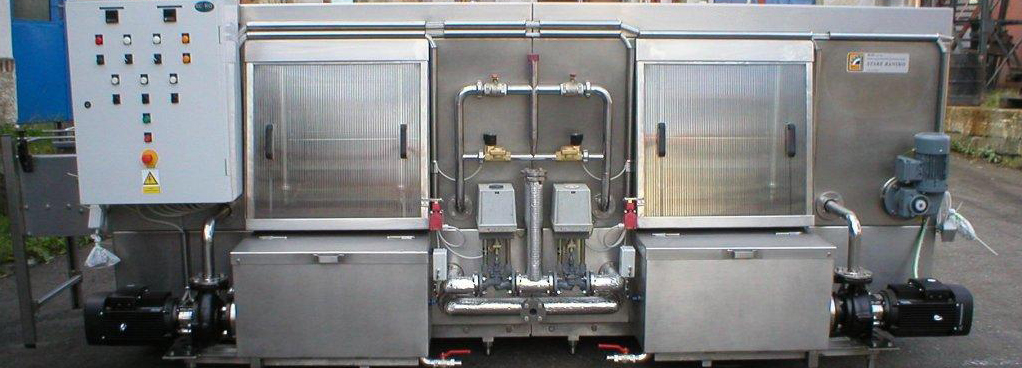
The machine is designed to wash various types of plastic boxes and their lids; it provides an effective cleaning and disinfection process.
Advantage

  • The washing of the boxes is carried out by the influence of the detergent solution in the box.
  • The main washing area is equipped with a circulation pump, which provides the supply of detergent solution from the tank to the nozzles.
  • The wash solution in the wash area circulates through the overheated tank. The tank has a mesh filter where the solution is cleaned of insoluble impurities.
  • The detergent is automatically introduced into the tank.
  • After passing the washing area, the boxes enter the rinsing area with clean water. The rinsing is carried out with clean running water supplied from the water supply network.
  • Use in combination with a box drying machine is recommended.

Thursday, 11 June 2020

How to Choose a Centrifuge

The first important thing you will need to consider when choosing Bottle Loaders is the function you want to use it for. If it will mainly be the tool for making orange juice in the morning, a normal juicer should be sufficient; while if you need to blend other types of fruit and vegetables, a centrifuge (or extractor) may be necessary. There are centrifuges on the market capable of extracting and treating seeds, stems and even centrifuging broccoli or pineapple. On the contrary, if you want to prepare an extract of wheat or other cereals (oats, rye, etc.) the choice should fall on a pressure blender ("chewing") with one or two speeds; the mechanisms of these appliances crush and "chew" the product slowly,


slide05


  1. When thinking about the amount to spend, consider how often you will use the Bottle Unloaders machine and for what purpose. Keep in mind that a centrifuge is usually more expensive than a juicer. Make a list of the features you need before going to buy the product.
  2. Is it important that the centrifuge looks good on the kitchen counter and can be put away easily? Some manufacturers use high quality materials to obtain a design that is suitable for any type of kitchen.
  3. Some more expensive centrifuges may be worth the price they cost in terms of reducing waste. A high quality allows the user to exploit the pulp and extract up to 33% more than the other models. Therefore, the reduction of food waste should also be taken into consideration when choosing the amount to spend. The pressure machines ("chewing") are unbeatable as regards the best juice extraction. If you only need this feature primarily, Sharper Image's Super Juicer claims to totally eliminate waste with its sizeable pulp container and large inclined feeding surface. If you intend to use the pulp, eliminating even more waste, you can use it to prepare cooked food, soups and sauces.

  4. How important is speed? Some fast Centrifugesdo not squeeze the product to the last drop (and therefore do not save the same amount of money for the consumer), but are able to extract a normal glass of fruit juice in about 5 seconds. If speed matters to you, look for a higher rpm (between 3000 and 7000) and a motor with more watts. However, faster machines can at the same time overheat to the point of destroying antioxidants and enzymes, ruining the beneficial properties of the juice! Also consider the fact that more powerful engines tend to make more noise. Read the reviews to make sure you find machines that don't crash. Even a larger feeding funnel facilitates and speeds up extraction, minimizing preparation times;
  5. Fewer moving parts of Churnsmean easier and faster instrument cleaning. Make sure the machine is made of stainless steel. Look for pulp containers and filters that are easy to remove - some need special tools to extract them for cleaning. The smaller the holes in the filter, the less pieces of fruit and vegetables you will scatter around the kitchen. Likewise, beveled surfaces are easier to wash than sharp corners; Also make sure that the components of the centrifuge are safe to put in the dishwasher.

  6. There is a wide offer regarding the guarantee of Crate Washers. The duration of the guarantee does not necessarily correspond to the price.

Saturday, 23 May 2020

What is packaging and how to choose packaging machines?

With food packaging refers to operations that protect food products from the external environment thanks to packaging. The procedure is used to contain, store, sell and transport food.
In the large-scale retail trade, having the opportunity to create flexible food packaging means being able to offer its customers a fresh product already weighed, packaged according to current regulations and labeled by communicating all useful information.
  1. Integrated functions
When we talk about Butter Production Lines, we refer to that process typically carried out in the back of the shop through which the products are prepared for sale. The procedure includes weighing, packaging and labeling.
What do large retailers need?
First of all, it is good to underline that the most used and widespread systems to date in Italy do not provide for a real integration between the scale, wrapping and labeling functions, even when faced with a solution that wants to be complete for packaging. food.
  1. Dimensions of automatic packaging machines
For a large-scale retail outlet of Butter Silos, the organization of spaces represents a significant challenge, because the shop must be as wide as possible to guarantee a customer experience that always lives up to expectations, but at the same time it is in the back that they take place several basic operations. Regardless of the size available, therefore, the choice of packaging machines must also take into account their size.

  1. Flexibility in the use of trays and packaging systems
Food packaging machines should not limit the type of products that can be offered to their customers.
Churns
Whether it's meat, fish, cold cuts, fruit or vegetables in bulk, even cut or ready-to-eat dishes, such as sushi for example, the possibility of using Butter Packing Machines is a strategic advantage.
Particular attention, therefore, must be paid to the different types of trays (for size, shape, rigidity) that can be packaged within the same instrument.
  1. Types of films
Among the needs of large retailers brands, attention to waste and respect for the environment is an increasingly recurring theme, both to comply with the regulations governing the use of materials containing plastics and microplastics, and to meet sensitivity growing audience on these topics.
PVC-free films in large retailers are making their way after the introduction by Unicoop, which was the first in Italy to declare the choice to eliminate PVC and phthalates from food films. Historically, PVC was considered the only viable solution, due to its capabilities in terms of flexibility and durability at the same time. Furthermore, automatic packaging machines appeared to be incompatible with PVC-free films.
  1. Labeling phase
The labeling operation is by no means secondary both as regards the aspects of sustainability and the reduction of CO2 emissions, and for the aspect more related to the communication between brand and customer.
Linerless technology is characterized by the presence of a self-adhesive roll that does not require any support. Butter Making Machines translates into a much smaller volume occupied by the rolls inside the warehouse, in the absence of waste material and, as a direct consequence, of one less component which can cause the machine to jam.


Tuesday, 21 April 2020

Types of packaging machines for the industrial sector

In the packaging and packaging systems we find its main function and base, which is the packaging, the wrapper that contains the merchandise to group the products temporarily and thus facilitate their handling, transport and storage.

The Bottle Loaders works as a protection and guarantees the integrity of the goods throughout the process. In this sense, the tertiary packaging is the final layer that covers the product, and therefore the packaging is the last step in the production line.

Thus, there are numerous machines with different functions at the end of the production line and each of them is intended to provide a solution based on the needs of the product;
  1. Strapping machines
The strapping machine is a machine that seals the goods to each other horizontally, vertically or to the pallet. This strapping or lacing is carried out with a strap that surrounds the load.

The strap, as well as the strapping system, varies according to the merchandise, where the strap can be found in different materials depending on the weight of the load.

For example, heavy goods need a steel strap, and the food industry must have a hygienic strap with materials such as PET.

slide01

Bottle Unloaders machine function? The strapping machine surrounds the load with the strap to stabilize it during transport and handling, allowing a perfect reception by the customer. In this way, breakage and damage to the load are avoided.

The main applications of the strapping machine are:

Sealing of packages for shipping and transportation
Compacting and grouping of products
Grouping and joining of individual pieces of smaller or larger size.
Security sealed and sealed in boxes, wrappers and containers.
Fix the load directly on the pallet.
  1. Shrink / Shrink Furnaces
Shrink ovens or Crate Washers are machines that package or wrap the merchandise with a thermoplastic film.
This plastic wrap seals the product or load to the pallet, so that the merchandise is protected against dirt and other manipulations.
Shrinking means packaging a product with a film or transparent film that retracts and adapts to the shape of the product.
A shrink- wrap machine reduces costs in the product packaging process: it stretches the plastic film so that the amount of film used is saved
Retraction furnaces are used in various industries and can be found in different sizes, as well as with more or less automation.
  1. Hooded
The capper wraps and protects the load with an extendable plastic cover or film, in this way, the Centrifuges are protected against inclement weather such as rain, dirt and dust.
A hooded machine also performs shrink wrapping, which consists of sealing the wrapping, in this way it becomes inviolable.
It is a system for fixing merchandise to fixed trays, to make a waterproof load that can be stored abroad.
  1. Wrapper / Baler
It is an installation that packages the load and Churns it with a transparent plastic film that protects the merchandise from dirt and ensures stability during the transport and handling of the goods.
The wrapper is essential to save meters of the film that covers the load. Without the wrapper, up to 3 times more film is spent, in addition to not obtaining the necessary safety compaction for the merchandise.

Tuesday, 7 April 2020

How to properly vacuum pack butter?


Pack food when it is as low as possible. This avoids risky temperatures and the food will not give off steam harmful to the machine. Hot vacuum packed food can generate unwanted water vapor inside the vacuum bag.
The packaging of the Butter Silos prevents them from overflowing the vacuum bag. For certain foods, the cold generates better structure of the flesh which allows them to better withstand the effects of pressure. In some cases (seafood), the product is even chilled by immersing it in ice water.
  • Pack liquids in bags that are long and wide enough to prevent them from overflowing. The liquid tends to swell the bag during evacuation and to escape through the part where the suction takes place.
  • Make sure that the opening of the welding bag is always clean, flat and free of creases.
  • Reinforce hygiene measures as much as possible: cleaning and disinfection.
  • Choose the vacuum bags according to the machine and the products to be packaged.
  • Labeling: the packaged product must imperatively be labeled by Butter Packing Machines. The labeling system can vary but a minimum of data is always required: contents of the sachet and useful life. The usual information is: the name of the product, its date of production, its expiry date, the person responsible for the preparation, the number of the preparation, the function or recipient of the preparation and the place of storage .

    slide01.jpg
4 tips for vacuuming fragile products
  1. Pressure: set the vacuum pressure to a lower value while maintaining a minimum of 98% vacuum or 20 mbar.
  2. Vacuum boxes: use jars, vacuum boxes or Green Vac containers to put fragile products under vacuum.
  3. Inert gas: replace part of the vacuum with gas (bell machine gas option). The gas replaces the air and prevents the bag and its contents from being crushed.
  4. The gradual return to atmosphere: this option (bell machine) ensures slow and gradual return to the end of the cycle of Butter Making Machines so that the bag gently follows the packaged product.
Should a product to be kept cool be vacuumed?
Yes. If bacteria that do not require oxygen are initially present in the product, after Butter Production Lines, these bacteria continue to grow more at room temperature than refrigerated.
The advantages of vacuum for Butter?
  • Preservation begins with protection
Protect red and pink meats and poultry with MAP packaging (gas injection),
Respect the minimum oxygen O2 content to maintain color,
Slow the development of microorganisms,
Multiply by 2 or 3 the DLC,
Keep your parts cool up to 5-8 days instead of 2-4 days.
  • Transport without odors or dirt
Avoid blood drips and odors during transport,
Respect HCCAP standards,
Physically protect your room from its environment,
Chemically protect organic products stored together.
  • An adapted and enticing presentation
Carefully present your products with traditional or luxury
packaging , Vary the packaging and consumables: sachets, trays and terrines.
  • The amplified smoked or dried taste
Concentrate better the aromas of smoking and salting,
Save the condiments and eliminate the preservatives and additives,

Cook the meats under vacuum with their accompaniments.