Saturday, 23 May 2020

What is packaging and how to choose packaging machines?

With food packaging refers to operations that protect food products from the external environment thanks to packaging. The procedure is used to contain, store, sell and transport food.
In the large-scale retail trade, having the opportunity to create flexible food packaging means being able to offer its customers a fresh product already weighed, packaged according to current regulations and labeled by communicating all useful information.
  1. Integrated functions
When we talk about Butter Production Lines, we refer to that process typically carried out in the back of the shop through which the products are prepared for sale. The procedure includes weighing, packaging and labeling.
What do large retailers need?
First of all, it is good to underline that the most used and widespread systems to date in Italy do not provide for a real integration between the scale, wrapping and labeling functions, even when faced with a solution that wants to be complete for packaging. food.
  1. Dimensions of automatic packaging machines
For a large-scale retail outlet of Butter Silos, the organization of spaces represents a significant challenge, because the shop must be as wide as possible to guarantee a customer experience that always lives up to expectations, but at the same time it is in the back that they take place several basic operations. Regardless of the size available, therefore, the choice of packaging machines must also take into account their size.

  1. Flexibility in the use of trays and packaging systems
Food packaging machines should not limit the type of products that can be offered to their customers.
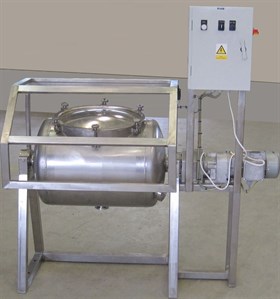
Churns
Whether it's meat, fish, cold cuts, fruit or vegetables in bulk, even cut or ready-to-eat dishes, such as sushi for example, the possibility of using Butter Packing Machines is a strategic advantage.
Particular attention, therefore, must be paid to the different types of trays (for size, shape, rigidity) that can be packaged within the same instrument.
  1. Types of films
Among the needs of large retailers brands, attention to waste and respect for the environment is an increasingly recurring theme, both to comply with the regulations governing the use of materials containing plastics and microplastics, and to meet sensitivity growing audience on these topics.
PVC-free films in large retailers are making their way after the introduction by Unicoop, which was the first in Italy to declare the choice to eliminate PVC and phthalates from food films. Historically, PVC was considered the only viable solution, due to its capabilities in terms of flexibility and durability at the same time. Furthermore, automatic packaging machines appeared to be incompatible with PVC-free films.
  1. Labeling phase
The labeling operation is by no means secondary both as regards the aspects of sustainability and the reduction of CO2 emissions, and for the aspect more related to the communication between brand and customer.
Linerless technology is characterized by the presence of a self-adhesive roll that does not require any support. Butter Making Machines translates into a much smaller volume occupied by the rolls inside the warehouse, in the absence of waste material and, as a direct consequence, of one less component which can cause the machine to jam.

Tuesday, 21 April 2020

Types of packaging machines for the industrial sector

In the packaging and packaging systems we find its main function and base, which is the packaging, the wrapper that contains the merchandise to group the products temporarily and thus facilitate their handling, transport and storage.

The Bottle Loaders works as a protection and guarantees the integrity of the goods throughout the process. In this sense, the tertiary packaging is the final layer that covers the product, and therefore the packaging is the last step in the production line.

Thus, there are numerous machines with different functions at the end of the production line and each of them is intended to provide a solution based on the needs of the product;
  1. Strapping machines
The strapping machine is a machine that seals the goods to each other horizontally, vertically or to the pallet. This strapping or lacing is carried out with a strap that surrounds the load.

The strap, as well as the strapping system, varies according to the merchandise, where the strap can be found in different materials depending on the weight of the load.

For example, heavy goods need a steel strap, and the food industry must have a hygienic strap with materials such as PET.

slide01

Bottle Unloaders machine function? The strapping machine surrounds the load with the strap to stabilize it during transport and handling, allowing a perfect reception by the customer. In this way, breakage and damage to the load are avoided.

The main applications of the strapping machine are:

Sealing of packages for shipping and transportation
Compacting and grouping of products
Grouping and joining of individual pieces of smaller or larger size.
Security sealed and sealed in boxes, wrappers and containers.
Fix the load directly on the pallet.
  1. Shrink / Shrink Furnaces
Shrink ovens or Crate Washers are machines that package or wrap the merchandise with a thermoplastic film.
This plastic wrap seals the product or load to the pallet, so that the merchandise is protected against dirt and other manipulations.
Shrinking means packaging a product with a film or transparent film that retracts and adapts to the shape of the product.
A shrink- wrap machine reduces costs in the product packaging process: it stretches the plastic film so that the amount of film used is saved
Retraction furnaces are used in various industries and can be found in different sizes, as well as with more or less automation.
  1. Hooded
The capper wraps and protects the load with an extendable plastic cover or film, in this way, the Centrifuges are protected against inclement weather such as rain, dirt and dust.
A hooded machine also performs shrink wrapping, which consists of sealing the wrapping, in this way it becomes inviolable.
It is a system for fixing merchandise to fixed trays, to make a waterproof load that can be stored abroad.
  1. Wrapper / Baler
It is an installation that packages the load and Churns it with a transparent plastic film that protects the merchandise from dirt and ensures stability during the transport and handling of the goods.
The wrapper is essential to save meters of the film that covers the load. Without the wrapper, up to 3 times more film is spent, in addition to not obtaining the necessary safety compaction for the merchandise.

Tuesday, 7 April 2020

How to properly vacuum pack butter?


Pack food when it is as low as possible. This avoids risky temperatures and the food will not give off steam harmful to the machine. Hot vacuum packed food can generate unwanted water vapor inside the vacuum bag.
The packaging of the Butter Silos prevents them from overflowing the vacuum bag. For certain foods, the cold generates better structure of the flesh which allows them to better withstand the effects of pressure. In some cases (seafood), the product is even chilled by immersing it in ice water.
  • Pack liquids in bags that are long and wide enough to prevent them from overflowing. The liquid tends to swell the bag during evacuation and to escape through the part where the suction takes place.
  • Make sure that the opening of the welding bag is always clean, flat and free of creases.
  • Reinforce hygiene measures as much as possible: cleaning and disinfection.
  • Choose the vacuum bags according to the machine and the products to be packaged.
  • Labeling: the packaged product must imperatively be labeled by Butter Packing Machines. The labeling system can vary but a minimum of data is always required: contents of the sachet and useful life. The usual information is: the name of the product, its date of production, its expiry date, the person responsible for the preparation, the number of the preparation, the function or recipient of the preparation and the place of storage .

    slide01.jpg
4 tips for vacuuming fragile products
  1. Pressure: set the vacuum pressure to a lower value while maintaining a minimum of 98% vacuum or 20 mbar.
  2. Vacuum boxes: use jars, vacuum boxes or Green Vac containers to put fragile products under vacuum.
  3. Inert gas: replace part of the vacuum with gas (bell machine gas option). The gas replaces the air and prevents the bag and its contents from being crushed.
  4. The gradual return to atmosphere: this option (bell machine) ensures slow and gradual return to the end of the cycle of Butter Making Machines so that the bag gently follows the packaged product.
Should a product to be kept cool be vacuumed?
Yes. If bacteria that do not require oxygen are initially present in the product, after Butter Production Lines, these bacteria continue to grow more at room temperature than refrigerated.
The advantages of vacuum for Butter?
  • Preservation begins with protection
Protect red and pink meats and poultry with MAP packaging (gas injection),
Respect the minimum oxygen O2 content to maintain color,
Slow the development of microorganisms,
Multiply by 2 or 3 the DLC,
Keep your parts cool up to 5-8 days instead of 2-4 days.
  • Transport without odors or dirt
Avoid blood drips and odors during transport,
Respect HCCAP standards,
Physically protect your room from its environment,
Chemically protect organic products stored together.
  • An adapted and enticing presentation
Carefully present your products with traditional or luxury
packaging , Vary the packaging and consumables: sachets, trays and terrines.
  • The amplified smoked or dried taste
Concentrate better the aromas of smoking and salting,
Save the condiments and eliminate the preservatives and additives,

Cook the meats under vacuum with their accompaniments.

Sunday, 15 March 2020

Bottle Packaging - Packaging AndDistribution

The process begins by removing the bottle crates from the pallets and placing them in the unpacking machine. Then the bottles are separated from the boxes and taken to the Crate Washers. In this machine, the bottles go through different temperatures and detergent solutions to finally be rinsed with jets of freshwater at different pressure process that assures us to have impeccable bottles.

Subsequently, a conveyor belt moves the bottles clean and still empty, for strict quality control through electronic inspectors provided with optical sensors that check every small detail or imperfection and automatically separate the bottles that do not meet the appropriate conditions.

Once the electronic inspector has selected the bottles, they go to the packaging machines to be filled and capped. The Bottle Loaders have vacuum pumps, pressure recorders, and implements of great precision and modernity that ensure a continuous, efficient, and quality process.
Once we have filled and capped bottles, we go to the pasteurization process, where the biological stability of the product is ensured through different temperature changes.
Each of the bottles is then identified by placing labels and the date of packaging.


Finally, the bottles already labeled are introduced in plastic boxes through automated machines. The boxes with the product are placed on pallets or pallets to be taken to the warehouse where they are stored and are ready to be transported to the various points of sale in the country.

Distribution: its distribution centers integrate employees, materials, machinery, auxiliary activities, and any other factor so that the best compromise between all these parties that complement the distribution results.

                  241

The trucks, an important point of the distribution area, comply with a sophisticated design and have a modern bodywork that allows increasing the productivity in the loading and unloading of products with Bottle Unloaders. This system reduces the operating time, both in small stores and in stores — supermarkets, where we now focus our effort to efficiently and effectively meet your product requirements.
Aware of the responsibility of the community, the new trucks are equipped with an electronic speed limiter. They also have an additional engine brake to the service brakes, making them safer and minimizing the risk of traffic accidents.
PROBLEMS DETECTED
  • Lack of bottles: The lack of bottles in the packaging process is a problem that must be addressed urgently, since the lack of elements like this is a sign that there is a lack of organization, planning, inventory, lack of communication between departments, Between the company and the suppliers. The lack of bottles at the time of filling these causes a delay in the process, resulting in the loss of time, loss of money, because all this provides time and money for the development of a product. But we must look for the specific causes that cause the raw material is not just in time.

  • Lack of labels: This is another bottleneck found in the National Brewery in the packaging area, a situation that causes the product to be unavailable for the distribution of bottles, in addition to gaining a bad image before its customers since Your product is not delivered in the required time.

Saturday, 29 February 2020

What is packaging, and what does it consist of?


The packaging is an integral part of the process. It fulfills two important objectives: to announce the product and protect it properly so that it is preserved for a certain period.
The package must meet a series of fundamental requirements, including:
  • Containment
  • Protection and conservation
  • Communication
  • Manufacturing facility
  • The comfort of use
The main packaging techniques are:
Traditional packaging
Vacuum packed

Packaged in controlled atmospheres (EAC)
The packaging materials can be classified in the following groups:
Packaging for sale
 The containers for the sale of the product to the consumer are those that contain the product, inform about it, and protect it during its use and domestic storage.
Containers for transport
 They are the ones that protect the Butter Production Lines during transport and its distribution.
The containers must be filled with the precise amount of product to comply with current regulations. The effective closure of the package guarantees the maintenance of the quality of the packaged product during its useful life. The closure constitutes the weakest part of the container.
Closed
The closing operation consists of the union of the lid or closure with the container. The lid is the element that guarantees the duration and inviolability of the product.
Any of the following systems closes the containers:
Pressure closures: this type of closure is used for carbonated beverages. The cap can be cork, injection-molded polyethylene, crown cap, and aluminum screw caps.
Normal closures: these include cork stoppers with tin foil, aluminum caps, and aluminum foil caps.
slide05.jpg

Vacuum closures: they are used for preserves and jars of Butter Silos.
Vacuum packaging
Vacuum packaging is a technique that relies on the elimination of oxygen to reduce the proliferation of aerobic microorganisms that produce product degeneration.
IT IS NECESSARY:
  • An enclosure that can be closed tightly.
  • A vacuum pump
The types of vacuum packing machines are:
Vacuum packing machines for bags. It consists of a chamber that closes tightly and from which atmospheric air is completely extracted. They may be:
  • Of a bell
  • Double bell
  • Automatic
Barlet sealers
It is composed of a chamber or mold that closes tightly and consists of two parts; the lower part slides horizontally to be able to place the preformed barlets, previously loaded with product, in the corresponding alveoli. There are two kinds:
  • Semiautomatic sealers
  • Automatic sealers
Controlled atmosphere packaging (eac).
The technology of controlled atmosphere packaging (EAC) uses semipermeable films in association with a known composition of gas introduced into the container, which provides the desired internal atmosphere over the life of the product composition.
In the closed container, the level of oxygen will decrease, and the level of CO2 will increase due to the effects of the natural respiration of the raw vegetable.
If the Butter Making Machines were completely waterproof, the product would be altered quite quickly as a result of anaerobic glycolysis with low oxygen pressures.

There are two packaging techniques in modified atmosphere :
  • Vacuum compensated
The vacuum technique is used to remove the air inside the container, and once removed, the protective gas is injected, and the film is heat-sealed.
  • Bell packing machines.
  • Butter Packing Machines
  • Automatic packaging machines
  • By sweep

 This technique consists in displacing the atmospheric air of the container by sweeping the gas or mixture of gases to be used.

Saturday, 22 February 2020

What is packaging, and what does it consist of?

The packaging is an integral part of the process. It fulfills two important objectives: to announce the product and protect it properly so that it is preserved for a certain period.

The package must meet a series of fundamental requirements, including:
  • Containment
  • Protection and conservation
  • Communication
  • Manufacturing facility
  • The comfort of use
The main packaging techniques are:

Traditional packaging

Vacuum packed

Packaged in controlled atmospheres (EAC)

The packaging materials can be classified in the following groups:
Packaging for sale
 The containers for the sale of the product to the consumer are those that contain the product, inform about it, and protect it during its use and domestic storage.

Containers for transport
 They are the ones that protect the Butter Production Lines during transport and its distribution.
The containers must be filled with the precise amount of product to comply with current regulations. The effective closure of the package guarantees the maintenance of the quality of the packaged product during its useful life. The closure constitutes the weakest part of the container.

Closed

The closing operation consists of the union of the lid or closure with the container. The lid is the element that guarantees the duration and inviolability of the product.

Any of the following systems closes the containers:

Pressure closures: this type of closure is used for carbonated beverages. The cap can be cork, injection-molded polyethylene, crown cap, and aluminum screw caps.

216

Normal closures: these include cork stoppers with tin foil, aluminum caps, and aluminum foil caps.

Vacuum closures: they are used for preserves and jars of Butter Silos.

Vacuum packaging

Vacuum packaging is a technique that relies on the elimination of oxygen to reduce the proliferation of aerobic microorganisms that produce product degeneration.

IT IS NECESSARY:
  • An enclosure that can be closed tightly.
  • A vacuum pump
The types of vacuum packing machines are:
Vacuum packing machines for bags. It consists of a chamber that closes tightly and from which atmospheric air is completely extracted. They may be:
  • Of a bell
  • Double bell
  • Automatic
Barlet sealers
It is composed of a chamber or mold that closes tightly and consists of two parts; the lower part slides horizontally to be able to place the preformed barlets, previously loaded with product, in the corresponding alveoli. There are two kinds:
  • Semiautomatic sealers
  • Automatic sealers
Controlled atmosphere packaging (eac).
The technology of controlled atmosphere packaging (EAC) uses semipermeable films in association with a known composition of gas introduced into the container, which provides the desired internal atmosphere over the life of the product composition.

In the closed container, the level of oxygen will decrease, and the level of CO2 will increase due to the effects of the natural respiration of the raw vegetable.

If the Butter Making Machines were completely waterproof, the product would be altered quite quickly as a result of anaerobic glycolysis with low oxygen pressures.

There are two packaging techniques in modified atmosphere :
  • Vacuum compensated
The vacuum technique is used to remove the air inside the container, and once removed, the protective gas is injected, and the film is heat-sealed.
  • Bell packing machines.
  • Butter Packing Machines
  • Automatic packaging machines
  • By sweep
 This technique consists in displacing the atmospheric air of the container by sweeping the gas or mixture of gases to be used.

Sunday, 16 February 2020

Butter Production Line and Butter Packing Machine

Butter Production Lines machines are used for the production of butter and cream, it has a container for the production of butter and cream. The capacity ranges between 50 and 300 l. It can be designed with one, two or three walls, as required. The inside of the container is made so that the butter does not stick. It includes a kneader and an agitator with hollow shaft worm gearbox. The energy is depends on the size of the tank. Main features
- We produce complete lines of butter processing, from cream tanks to final packaging equipment
- Butter machines for 10,000 kg of butter per hour
- Machinery for the production of butter in batches of up to 5000 l of cream
- With our continuous butter making machines not only butter can be produced, but also different types of spreads
- Low fat content of milk powder: 0.5%
- Long service life of the final product
- Our butter manufacturing lines are easy to use, compact and easy to maintain
It has different dosage units: Butter making machines can be equipped with different types of dispensers: for moisture, cultivation, oil (for the production of spreads), dry ingredients (mushrooms, herbs, cocoa, etc.) and salt grout. It can go in a straight line to the packaging machine. Butter Silos are integral to a flexible and continuous butter manufacturing process.
slide03

Benefits of Butter Production Line

Improvements in the design of the plates in a working butter. The package of plates include the "turbulence services cape" mode achieved
  • The plates are doing by the hydraulic cutting machine that excludes the occurrence of intension in the metal, welding operations is provided in the special stands.
  • Knives are made of high density material.
  • Rubber with improved quality indicators is used in manufacturing.
  • Butter work is equipped with regeneration system, automated and equipped with an automatic defrosting system (protection against power outage or increase).
  • Handler has improved functionality in terms of dispersion of the base and provides a stable phase of the final product.
  • Specification of the process line is to include high semi-hermetic cream grease separators with centrifugal sediment discharge.
Butter Packing Machine
Butter Packing Machines are designed for wrapping butter in aluminium foil or parchment paper. The machines are offered with different capacities, each of them packaging the product in a predetermined dosage range. The product is loaded by a bunker with stainless steel screws. All machine surfaces that come into contact with the product are made of stainless steel. The capacity is easy to adjust by frequency converter and depends on the dose and the type of packaging (packaging 200-250 g, capacity 35-70 pcs. /min).  Main features

- Products to be packed: butter, margarine, spreads edible fats, minced meat, curd, fresh cheese, and other pasta products
- Machine performance: 20 - 80 packages / min
- Package sizes: Machine modifications of 8 - 1000 g cover a wide dosage range and a wide variety of brick sizes
- Possibility of having different sized portions with a single machine, simply by adjusting the height of the brick